
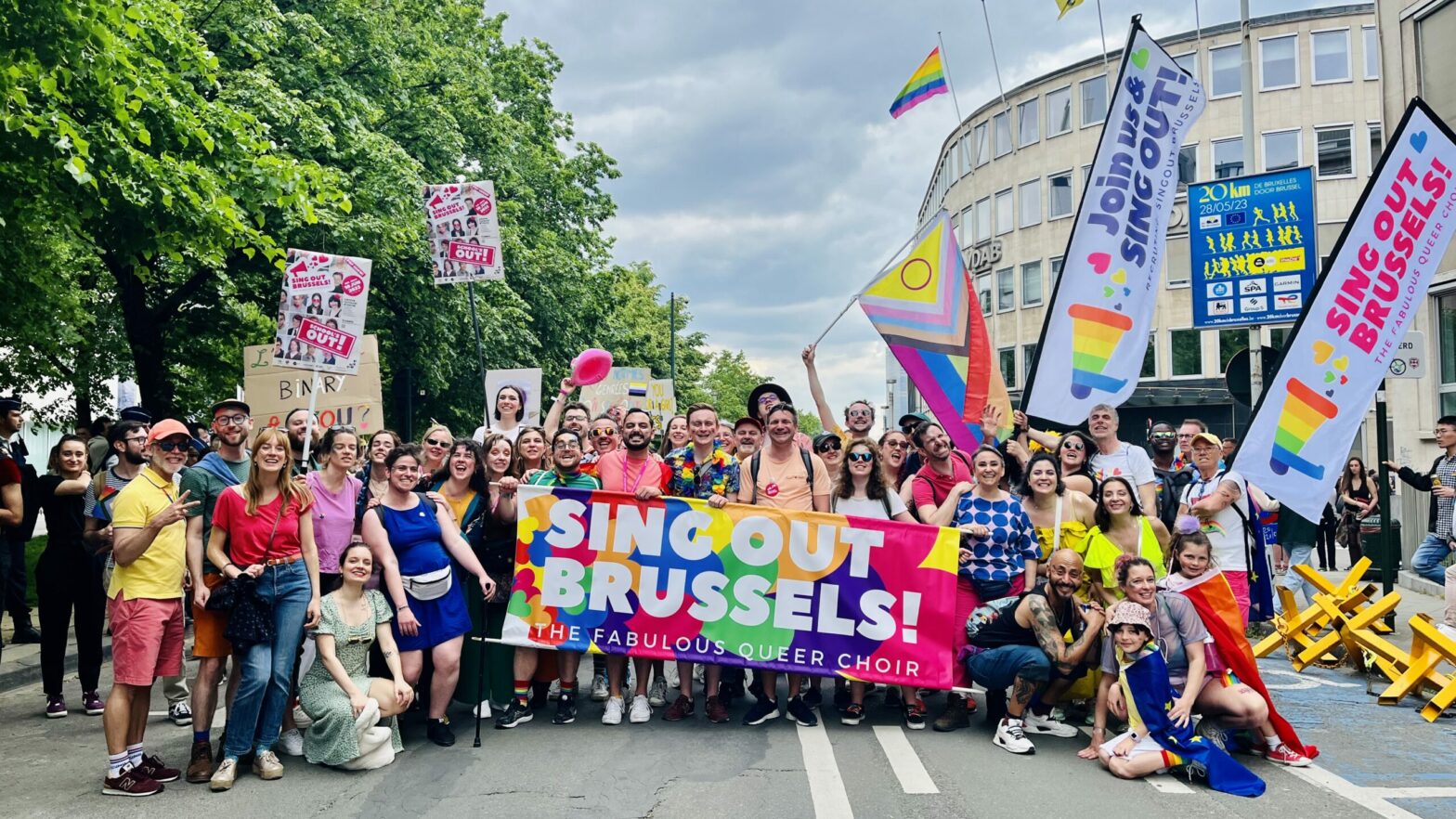
At a conference held at Bozar in November, Israeli researcher Yonatan Volfin presented a case study on our choir. This presentation is part of his in-depth research on the characteristics of LGBTQI+ choirs and their role in strengthening the sense of belonging.
What are the characteristics of LGBTQI+ choirs and how do they strengthen their members’ sense of belonging? This is the subject of Yonatan Volfin’s research, who studied at the Amsterdam Conservatory and Levinskey College of Education in Tel Aviv. He is currently a researcher at Ghent University.
As part of his research, Yonatan Volfin followed several choirs in their activities: Amsterdam Gay Men’s Chorus, Galakoor Queer Klassiek (Amsterdam), Tel Aviv Gay Choir and Sing Out Brussels! Last season, he attended six of our rehearsals, a board meeting, a day of workshops and a concert. He also interviewed eight people with responsibilities within the choir and conducted a survey of members (47 responses received).
From 24 to 26 November at Bozar, he participated in the 10th SIMM-posium (Social Impact of Music Making). This international research platform brings together experts in the fields of music practice and research. This symposium explored the social impact of participatory music-making in a wide range of cultural contexts and countries. Yonatan Volfin’s presentation was part ofa day devoted to musical practices that promote cultural continuity and resilience in marginalised communities. Several members of our Board were there to follow his presentation of a case study on our choir.
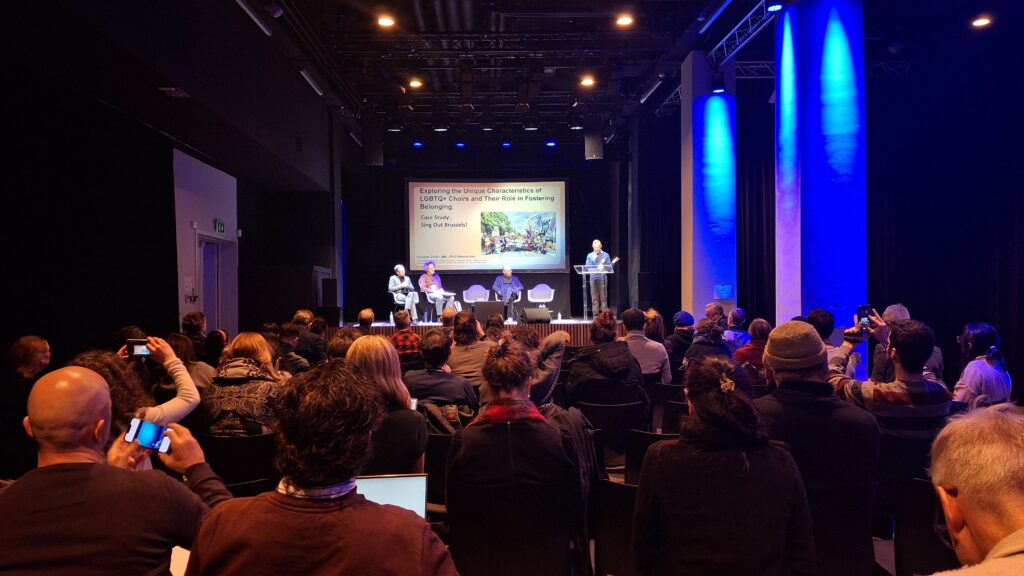
Yonatan Volfin began by recounting the history of LGBTQI+ choirs, which emerged in the wake of the gay liberation movement, a key event of which was the Stonewall riots in 1969. From the outset, LGBTQI+ choirs have played an artistic, social and political role. Today, there are more than 500 LGBTQI+ choirs across all continents.
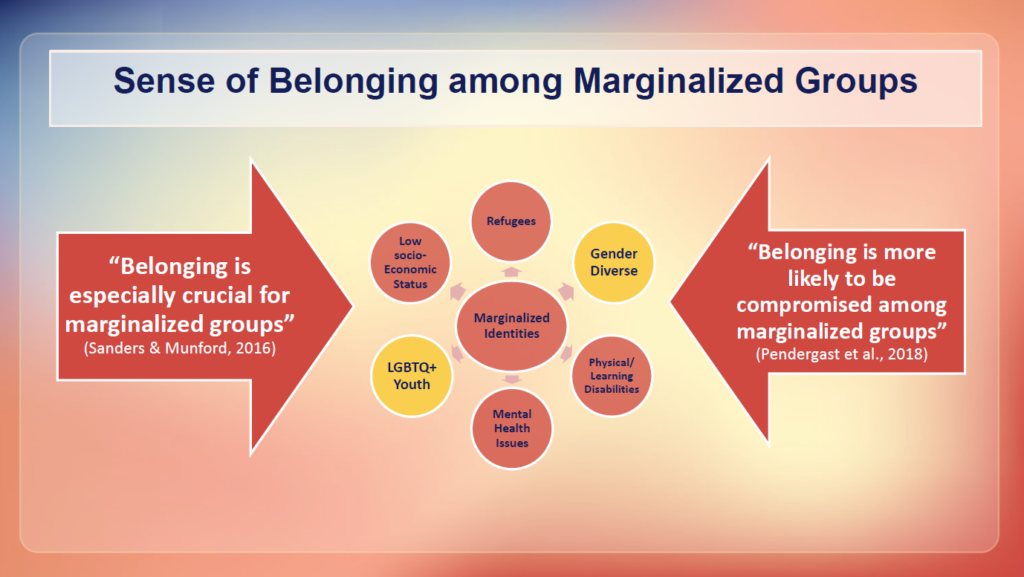
His observation is that a sense of belonging and the creation of bonds are crucial for marginalised communities including the LGBTQI+ community. It is well established that the collective creation of music creates a sense of belonging. It is also well established that LGBTQI+ choirs offer a space that is distinct from the spaces frequented daily by members of the community. However, they remain an unexplored area of research. The distinctive characteristics of LGBTQ+ choirs remain understudied, and it is unclear how these characteristics contribute to fostering a sense of belonging. There is also no educational or training framework in this area, which is crucial for translating these ideas into practice.
Yonatan Volfin therefore immersed himself in the daily life of our choir, founded in 2018 in Brussels. What makes our group interesting is that it is mixed (SATB choir), large (80 members) and has a solid organisational structure (an elected board of directors and four groups of volunteers dedicated to artistic aspects, communication, strategy and community building). He also notes the great diversity of our choir (gender identity, sexual orientation, neurodiversity, nationality, culture, etc.).
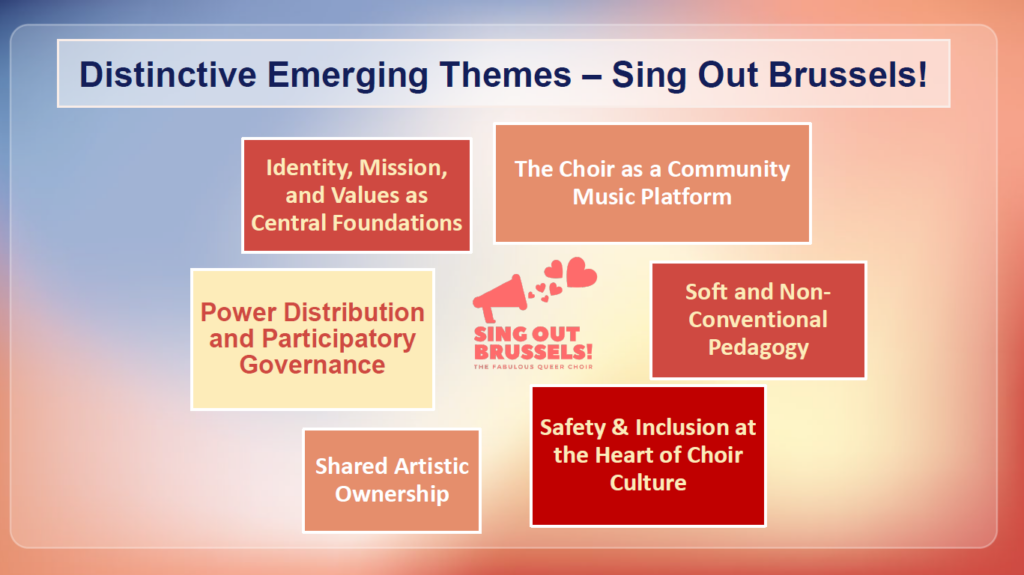
His analysis highlights the following characteristics:
- The choir’s identity, mission and values are central elements.
- The choir is a community
- The choir is a musical platform
- The organisation distributes power and ensures participatory governance
- Artistic ownership is shared
- The teaching style is gentle and unconventional
- Safety (safe space) and inclusion are at the heart of the choir’s culture
During his presentation, he shared testimonials gathered during his interviews, mentioning, for example, that the choir had helped to break down the barriers that often exist within the gay male community. Another person told him: ‘Unlike other places where I can’t be myself or where I feel like someone isn’t respecting my boundaries, I feel like in this choir, everyone is acting with the best of intentions, and that makes a big difference.’ Another testimonial read: ‘A fundamental difference we see here is that when people sing, the lyrics really mean something to them, they express something about themselves, unlike in a traditional choir, where you sing exactly the same songs because they are beautiful, but without going any further than that.’
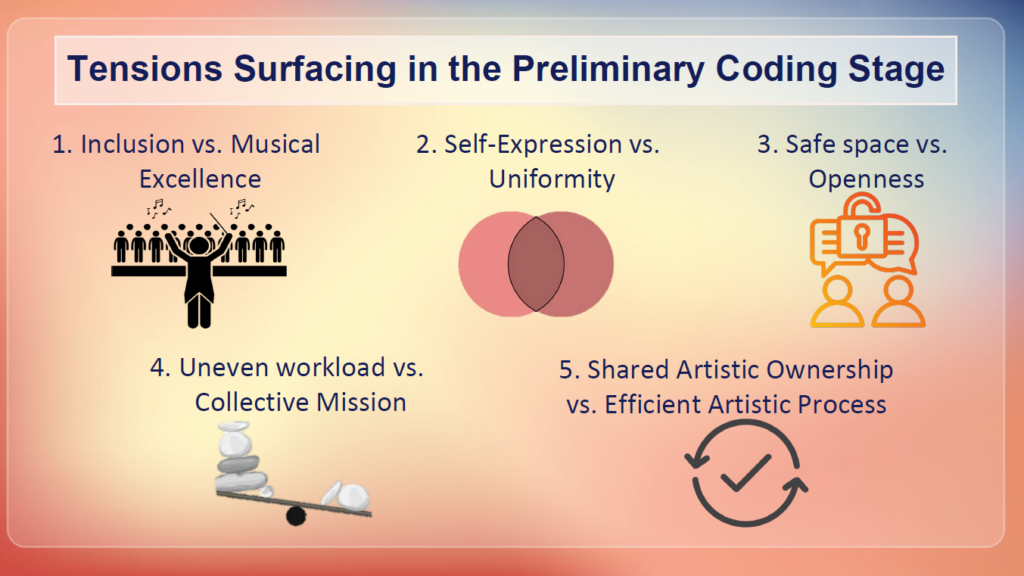
Yonatan Volfin also pointed out the challenges our group faces in reconciling seemingly opposing elements: inclusion and musical excellence, uniformity and free self-expression, a safer space and openness, an uneven workload and a collective mission, the participatory nature of the artistic process and its effectiveness.
He will continue his research in 2026 with interviews with several members of our choir. At the end of his presentation at Bozar, he mentioned the Various Voices festival that we are organising in June 2026 in Brussels, which will bring together 120 choirs and 4,000 LGBTQI+ singers. This is undoubtedly a favourable context for his research! We are certainly looking forward to hearing the conclusions of his work and consider it an honour that our choir is at the heart of this study. It reinforces our belief that what we do is useful and can have an impact on the lives of our members and society, which is at the heart of our mission.